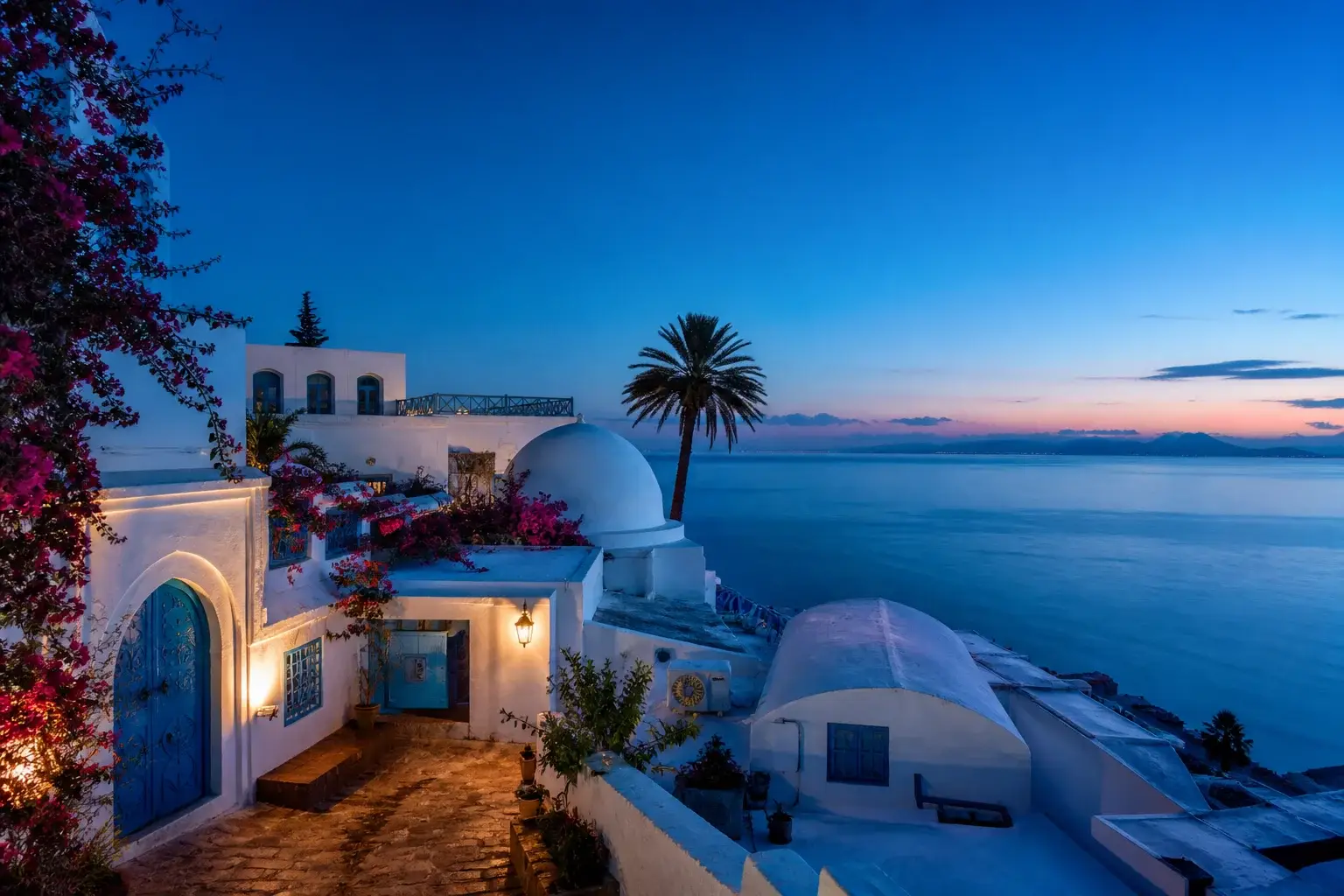
Every designer who grew up in Tunisia has a version of Sidi Bou Said in the mind: a stair, a door, a sudden drop to the water. It is easy to turn that into cliché. It is harder to turn it into a system.
Read as a system, the village is rigorous. White as field. Blue as interaction. Gold as late light, never as chrome. Density on the hill, then open sea. The user — the walker — is never lost, only delayed by beauty.
Digital products can learn from that. Too many screens explain themselves. Sidi Bou Said does not explain. It sequences. You turn, you climb, you arrive. The interface of 2060 should do the same: fewer labels, better corners.
The user — the walker — is never lost, only delayed by beauty.
The village is not a mood board. It is a proof that a country can invent a visual law and keep it for centuries. The next Tunisian interfaces will be judged by whether they are that patient.
Amine Karray