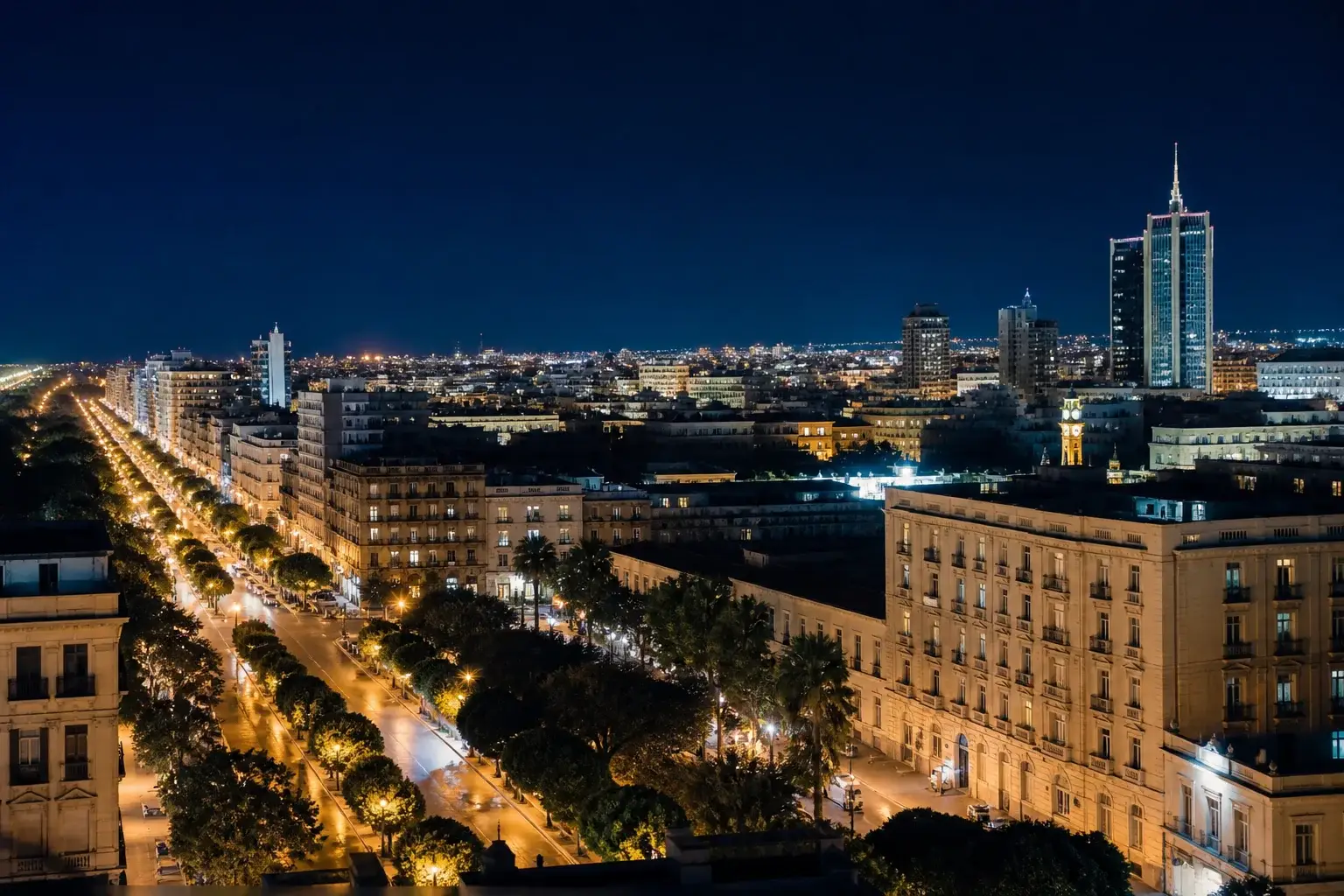
Tunisia has always been a hinge: Africa and the Mediterranean, Carthage and the present, Arabic and French, the port and the interior. The digital chapter is another hinge. The country is learning to export not only phosphate, olive oil and tourism, but software, design and destination systems.
In Lac, in the medina, in converted villas above Carthage, teams are building products for travellers, events, interiors and public services. They work in two or three languages without making a speech about it. That fluency is a competitive advantage that no accelerator can invent.
The new digital Tunisia is not a copy of California with better light. It is a network of small companies that treat hospitality as infrastructure. An airport transfer is a product. A furniture catalogue is a spatial essay. A DMC is a choreography of arrivals.
In Lac, in the medina, in converted villas above Carthage, teams are building products for travellers, events, interiors and public services.
Policy still lags. Payments still fray. Talent still leaves. And yet the work continues, because the market is no longer only local. A client in London or Riyadh can book a car in Djerba before the plane leaves the gate.
If the twentieth century asked Tunisia to be a destination, the twenty-first is asking it to be a publisher of experiences — designed, priced and delivered with the calm of a magazine, not the noise of a bazaar.
Editorial desk